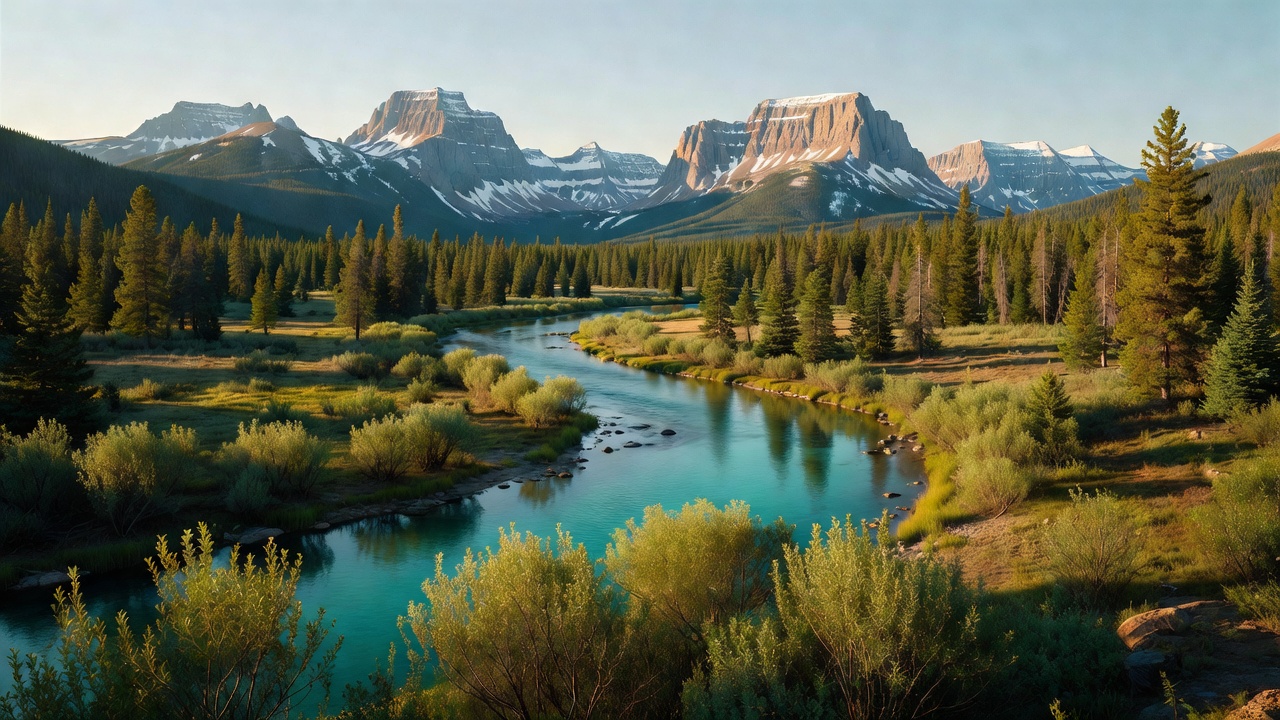
Flathead National Forest
Camp here — Flathead National Forest
434 camps mapped in this forest, 414 of them free. Tap one for its topo and aerial, the weather, the water, and how far you will be from fuel and a shower.
- FreeFlathead National Forest
- FreeFlathead County
- FeeFlathead County
- FreeBeaver Creek Campground
- FreeMoose Lake Campground
- FreeMorgan's Campsite
- FreeUSFS dispersed camp — MT #477
- FreeLog Landing
Where dispersed camping is listed — Flathead National Forest
The Forest Service lists dispersed camping as an activity at these 2 places. That is the agency saying it is allowed somewhere in the area — not a campsite we have mapped, and not a spot we can put a pin on. Read their page, then check the district for the rules that apply on the day.
- Billy Garret Memorial Bridge Access
This access site is on Forest Road #895 ( west side reservoir road) at mile marker # 55. This is a popular take out for trips originating further up the South Fork. It is also a good put in for floating the lower section of the…
the Forest Service page for it → - Upper Twin Creek Access
The Upper Twin Creek Access area is located 49 miles up the East side reservoir road #38. There is very limited camping but a vault toilet is available. This is the last take-out before the Hungry Horse Reservoir and below this…
the Forest Service page for it →
Where the camps cluster
The place
Flathead National Forest spreads across northwestern Montana -- roughly 2.4 million acres of national forest inside a proclaimed boundary of about two and a half million -- wrapping the west and south sides of Glacier National Park with some of the wildest country left in the lower 48. This is big-shouldered mountain terrain: the Swan, Whitefish and Mission ranges, the three forks of the Flathead River running clear and cold, and, at its heart, a large share of the Bob Marshall Wilderness Complex, whose centerpiece -- the Bob Marshall Wilderness itself -- locals just call "The Bob." It's grizzly country through and through, part of the Northern Continental Divide Ecosystem that holds one of the strongest grizzly populations left south of Canada. From the ski runs above Whitefish to the deep, roadless backcountry along the Continental Divide, the Flathead is a forest of superlatives that mostly keeps them to itself. The supervisor's office is in Kalispell.
History
The forest took shape in the early 1900s out of the public land reserves of the northern Rockies, and carries the name of the Flathead River and the wider Flathead country -- "Flathead" being an outsiders' name for the Salish people, whose homeland this region has long been, and not a name they chose for themselves. Its most famous ground, the Bob Marshall Wilderness, honors Bob Marshall, a forester, tireless mountain walker and wilderness champion who helped found The Wilderness Society before his early death in 1939 at just 38. The wild country here was set aside in his name not long after, and formally protected as wilderness under the 1964 Wilderness Act. In the late 1940s and early 1950s the Bureau of Reclamation built Hungry Horse Dam on the South Fork of the Flathead -- one of the tallest concrete dams in the world when it was finished around 1953 -- backing up the long reservoir that today anchors much of the forest's road system.
Wildlife & plants
This is one of the great wildlife forests of the northern Rockies. It sits in the Northern Continental Divide Ecosystem, home to one of the largest grizzly bear populations in the lower 48 -- so this is genuinely a place to carry bear spray and know how to use it. Along with grizzlies there are black bears, gray wolves, mountain lions, elk, moose, mule and white-tailed deer, mountain goats on the high crags and bighorn sheep on the open slopes. It's also habitat for two of the hardest animals in the West to ever lay eyes on -- Canada lynx and wolverine, both rare and elusive. The cold rivers and high lakes hold native westslope cutthroat trout and threatened bull trout, which run up the wild forks of the Flathead to spawn and need near-perfect water to survive. In early summer the high meadows fill with beargrass and glacier lilies, framed by dark forests of spruce, subalpine fir, western larch that turns gold in the fall, and lodgepole pine.
Notable features
The crown jewel is the Bob Marshall Wilderness Complex -- the Bob together with the neighboring Great Bear and Scapegoat wildernesses -- roughly 1.5 million acres of unbroken, roadless mountain country straddling the Continental Divide, one of the largest stretches of protected wilderness in the lower 48 and shared among the Flathead and its neighboring forests. Deep inside it stands the Chinese Wall, a limestone escarpment that runs for miles along the Divide and rises hundreds of feet -- in places close to a thousand -- like a natural rampart, so remote that just reaching its base is a multi-day trek. The three forks of the Flathead River -- the North Fork along Glacier's edge, the Middle Fork, and the South Fork draining the Bob -- are all protected Wild and Scenic Rivers (the South Fork's wild-and-scenic stretch runs above Hungry Horse Reservoir). Hungry Horse Reservoir stretches for miles behind its dam on the South Fork, and above the lake the Jewel Basin is a hiking-focused area speckled with a couple dozen mountain lakes in the Swan Range. The forest wraps the entire west and south boundary of Glacier National Park, and near Whitefish, Whitefish Mountain Resort (Big Mountain) runs its ski terrain under Forest Service permit on Flathead land.
Camps are sourced from public U.S. Forest Service recreation data and have not been personally visited. Roads shown are Forest Service passenger-car routes (maintenance level 3–5) and may be seasonal or gated. Always confirm access, fees and fire rules with the ranger district before you go. Found a fee where we show free? Tell us on the contact page.