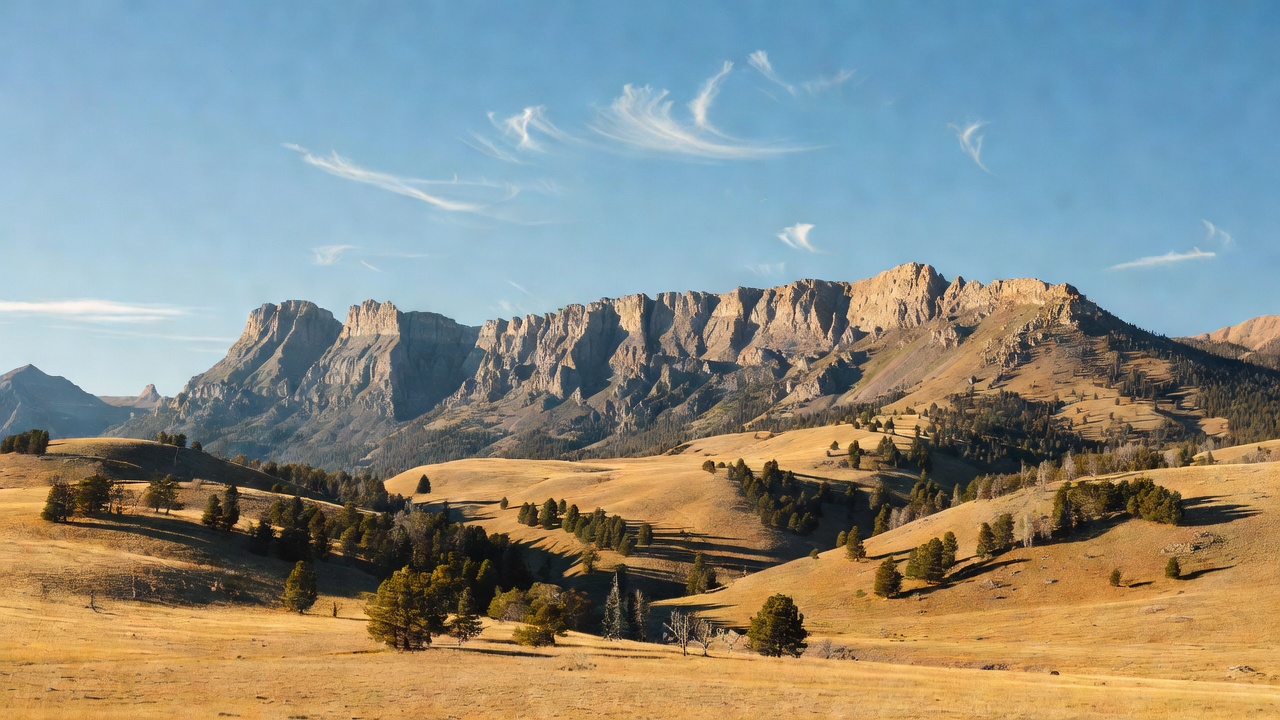
Helena-Lewis and Clark National Forest
Camp here — Helena-Lewis and Clark National Forest
948 camps mapped in this forest, 923 of them free. Tap one for its topo and aerial, the weather, the water, and how far you will be from fuel and a shower.
- FreeJellison Place
- FreeRoad 3327-02
- FreeEast Big Belts Gfa - Gipsy Cua
- FreeMarias/Palookaville
- FreeGibson 008
- FreeBelt Creek-003B
- FreeJefferson Creek-002
- FreePierce Park Rd 189-6
Where dispersed camping is listed — Helena-Lewis and Clark National Forest
The Forest Service lists dispersed camping as an activity at these 5 places. That is the agency saying it is allowed somewhere in the area — not a campsite we have mapped, and not a spot we can put a pin on. Read their page, then check the district for the rules that apply on the day.
- Castle Mountain Range
The Castle Mountains are located east of White Sulphur Springs, Montana. The highest peak is Elk Peak reaching a height of 8,589 feet. The Castles are a prime hunting location in the fall, and they do provide some recreational…
the Forest Service page for it → - Forest Lake Camping Area
Developed Dispersed sites. Bears may frequent the area; keep all food out of sight in approved containers and remove all food from area after eating. Mandatory food storage is required.
the Forest Service page for it → - Haymaker Dispersed Camping Area
Haymaker Park Trail (604) is a short trail that provides access to a system of trails. Nevada Creek Trail 601, Haymaker Canyon Trail 602, and Daisy-Mountain-High Trail 603 all join Haymaker Park. Haymaker Park offers large…
the Forest Service page for it → - Rocky Mountain Range
The Rocky Mountain Range is located in portions of Teton, Pondera, Glacier, and Lewis and Clark counties. The geographic area is bordered by U.S. Highway 2 and Glacier National Park to the north. The Blackfeet Nation lands are to…
the Forest Service page for it → - Snowy Mountain Range
The Snowies is the farthest east geographic area and is primarily in Fergus County with smaller portions in Golden Valley County. The geographic area includes both the Big and Little Snowy Mountain ranges. The Snowies display…
the Forest Service page for it →
Where the camps cluster
The place
Helena-Lewis and Clark sprawls across central and north-central Montana in two very different halves. Much of it is a scatter of separate 'island' mountain ranges -- the Big Belts, Little Belts, Elkhorns, Castles, Crazies, Highwoods and Snowies -- rising out of ranchland and old gold country, with the state capital of Helena set among them. Farther north it climbs the Rocky Mountain Front, that dramatic line where the Great Plains run straight into the mountains, and reaches into the vast Bob Marshall Wilderness. It's big, varied high country: limestone canyons, blue-ribbon trout rivers, alpine meadows, and some of the wildest backcountry left in the continental US.
History
The forest carries two of the biggest names in Montana's story. The 'Lewis and Clark' half honors the 1804-1806 Corps of Discovery, which traveled this country on the Missouri River -- in 1805 the expedition named a towering limestone canyon here the 'Gates of the Mountains,' because the cliffs seemed to swing open like doors as the boats approached. The 'Helena' half takes the name of Montana's capital, a city born in an 1864 gold strike at a creek the miners called Last Chance Gulch -- still the name of the city's main street. The Helena and Lewis and Clark national forests were managed separately for most of the last century and were brought together under a single name in the mid-2010s. This is old mining country, and prospectors' diggings and ghost-town ruins still dot the hills.
Wildlife & plants
This is serious big-game and big-predator country. Elk are the signature animal -- the Elkhorn Mountains are managed specifically for one of Montana's premier herds -- along with mule deer, whitetail, moose, mountain goats on the high rock, and bighorn sheep. The Rocky Mountain Front is renowned grizzly bear habitat, one of the few places where grizzlies still range out onto the open foothills and prairie edge as they did before the West was fenced; black bears, gray wolves, mountain lions, and the elusive wolverine also live here, though grizzly and wolverine keep mostly to the Front and the wilderness rather than the drier island ranges. Overhead you might spot a bald or golden eagle, and the headwater streams hold native westslope cutthroat trout.
Notable features
The Continental Divide runs across the forest, which protects a major east-side share of the Bob Marshall Wilderness Complex -- the legendary 'Bob' -- including the Scapegoat Wilderness and the east-side approaches to the Chinese Wall, a miles-long limestone escarpment along the Divide. The Gates of the Mountains Wilderness guards the Missouri River canyon that the expedition named, and you can still ride a tour boat through it. Signature ranges include the Big Belt, Little Belt, Elkhorn, Castle, Crazy, Highwood and Snowy Mountains, plus the Rocky Mountain Front. The Kings Hill Scenic Byway climbs over the Little Belts, and the Missouri River threads the whole region.
Camps are sourced from public U.S. Forest Service recreation data and have not been personally visited. Roads shown are Forest Service passenger-car routes (maintenance level 3–5) and may be seasonal or gated. Always confirm access, fees and fire rules with the ranger district before you go. Found a fee where we show free? Tell us on the contact page.