Klamath National Forest
Where the camps cluster
The place
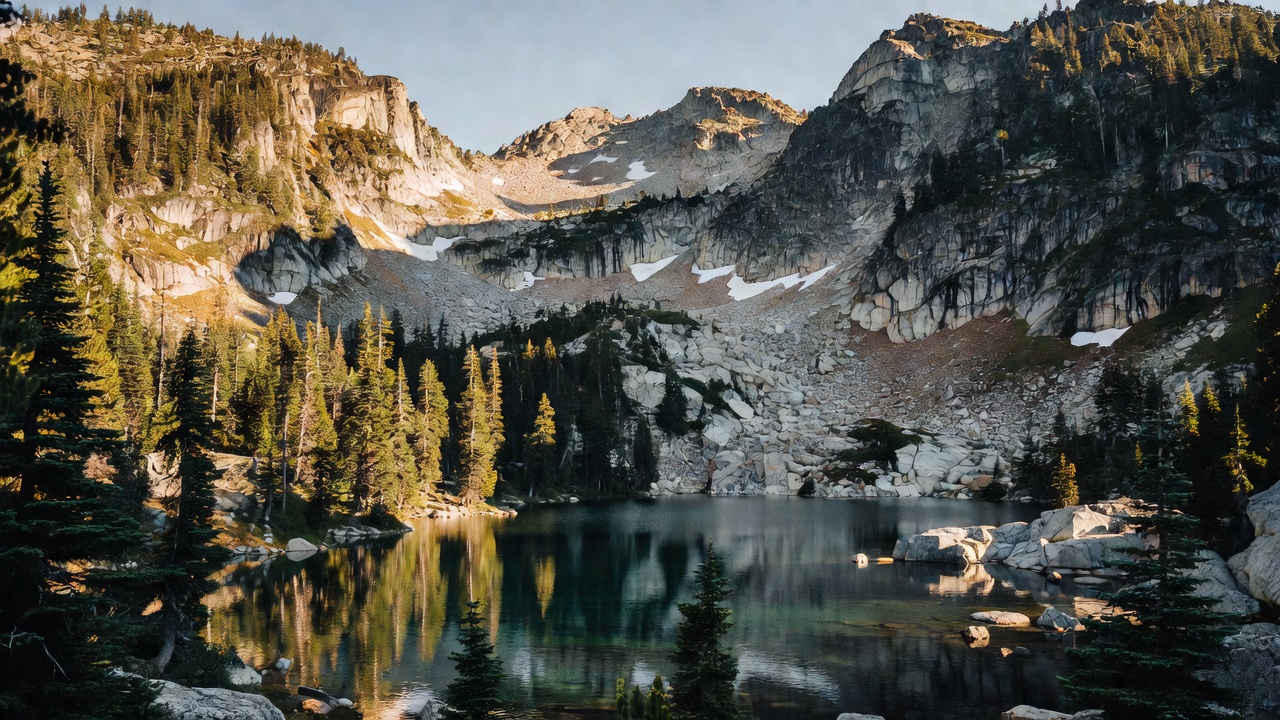
Klamath National Forest spreads across the steep, tangled Klamath Mountains and the western edge of the Cascade Range in the far northern corner of California, with a small tail crossing the line into southern Oregon. The Forest Service bills it simply as "A Northern California Adventure," and the landscape earns it: deep river canyons, dense old-growth woodlands, marble ridges and subalpine lakes packed into some of the wildest, least-crowded country in the state. The official page calls it a haven for campers, hikers, hunters, anglers, mountain bikers, white-water enthusiasts, geologists and botanists alike.
Water is the forest's throughline. The Klamath, Salmon and Scott Rivers meander from one end of it to the other, and the Klamath itself is protected as a National Wild & Scenic River -- a magnet for rafting, kayaking and tubing. Away from the rivers the terrain climbs into four wilderness areas and a botanical wonderland famous the world over, all of it managed together with the Butte Valley National Grassland, the only national grassland in California.
History
Klamath National Forest was established on May 6, 1905, in the first wave of national forests created as the U.S. Forest Service itself was taking shape -- placing it among the oldest units in the national forest system. Its headquarters sits in Yreka, the Siskiyou County seat, and the forest is administered through the Fort Jones, Happy Camp and Macdoel ranger districts. Today it is managed jointly with the Butte Valley National Grassland, an 18,425-acre basin in the southern Cascade Range that is the only national grassland in the state of California.
Wildlife & plants
This is one of the most biologically rich forests in the West. Its rivers and creeks carry king (chinook) salmon on spring and fall runs along with summer steelhead, drawing anglers from far afield, while black bears range the mixed woodlands and riparian bottoms, mountain lions hunt the canyons, and even the wolverine -- an elusive member of the weasel family -- turns up in the high backcountry. Douglas squirrels chatter in the timber and California quail scurry through the brush below. But the forest's real claim to fame is its plants: it is famous for the sheer diversity of its conifers, and the Forest Service has documented more than 3,000 plant species here -- an extraordinary number for an area of this size.
Notable features
The forest's signature is the "Miracle Mile," a patch of the Russian Wilderness where botanists have documented 18 species of conifer within a single square mile -- among the richest concentrations of cone-bearing trees found anywhere in a temperate climate. The Russian Wilderness is one of four here, alongside the Marble Mountain Wilderness -- known for its striking marble outcrops and wildflower meadows -- plus the Red Buttes and Siskiyou wildernesses, with the Pacific Crest Trail threading through on its way past craggy peaks and alpine lakes. Russian Peak rises to 8,199 feet as the high point of the Russian Wilderness, and quiet spots like Kangaroo Lake give the forest its unhurried, off-the-radar feel.
Camps are sourced from public U.S. Forest Service recreation data and have not been personally visited. Roads shown are Forest Service passenger-car routes (maintenance level 3–5) and may be seasonal or gated. Always confirm access, fees and fire rules with the ranger district before you go. Found a fee where we show free? Tell us on the contact page.