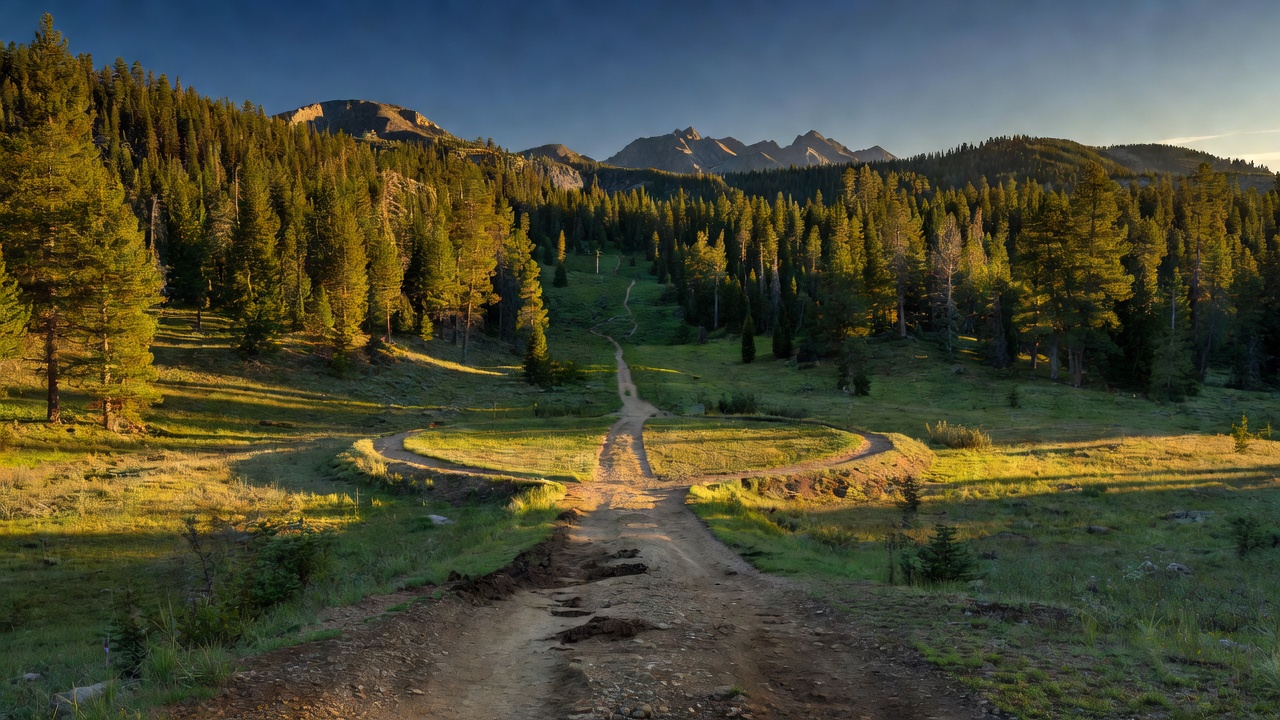
Wilderness area
A wilderness area is a piece of federal land that Congress itself voted to leave undeveloped, and the law that does it bans motor vehicles, motorized equipment and every other "form of mechanical transport" -- bicycles included -- which is why that promising road on your map dead-ends at the boundary and everything past it happens on foot, on horseback, or not at all.
In the field
Only Congress can make one. The Wilderness Act protects "federally owned areas designated by Congress as 'wilderness areas'," and defines wilderness in a line worth quoting at a campfire: "an area where the earth and its community of life are untrammeled by man, where man himself is a visitor who does not remain." Areas generally run at least five thousand acres. The Forest Service puts the whole national system at "over 111.7 million acres...of more than 803 wilderness areas administered for the American people by the federal government"; the BLM alone manages 263 of them. Key thing to understand: wilderness is an overlay, not a separate kind of land. A wilderness inside a national forest is still national forest -- same agency, same ranger district, much stricter rulebook.
For your trip, it means the rig stops. Section 4(c) of the Act says that in wilderness "there shall be no temporary road, no use of motor vehicles, motorized equipment or motorboats, no landing of aircraft, no other form of mechanical transport, and no structure or installation." The Forest Service's own regulation is blunter still: in National Forest Wilderness it is prohibited to be "Possessing or using a motor vehicle, motorboat or motorized equipment" and "Possessing or using a hang glider or bicycle." So no truck, no dirt bike, no e-bike, no generator, no chainsaw -- and no drone either, because the Forest Service treats UAS as "both 'motorized equipment' and 'mechanical transport' under Section 4(c)," meaning they "cannot take off from, land in, or be operated from congressionally designated Wilderness Areas." Camping in wilderness is backpacking. Your basecamp goes outside the line, which is exactly why the good dispersed pullouts cluster along the last few miles of road before a wilderness edge.
Here's the catch, and it's the one that surprises people: "mechanical transport" is a much bigger net than "motorized." The Deschutes National Forest spells out its list -- "chainsaws, bicycles, motorcycles, snowmobiles, hang gliders, aircraft, motorboats, wagons, game carts, baby strollers, wheelbarrows and other non-primitive tools and wheeled vehicles (wheelchairs excluded)." Yes, the game cart you were counting on to haul an elk out. Yes, the stroller. And the rest of the rules are written locally, so "the wilderness rules" is not a thing that exists: Deschutes caps groups at "12 persons and 12 head of stock," while the Sierra National Forest allows up to 15 people and 25 head of stock. Sierra also bans campfires "above 10,000 feet in elevation north of Glacier Divide, and above 10,400 feet south of Glacier Divide," and requires bear-resistant food storage. Look up the specific wilderness, every time.
Permits are local too, and increasingly they cover day hikers, not just overnighters. The Sierra National Forest prohibits camping in the John Muir, Ansel Adams, Dinkey Lakes or Kaiser wildernesses "without a valid wilderness permit." On the Central Cascades in Oregon, permits "are required June 15-Oct. 15" at "19 of 79 trailheads," with a "Day use permit: $1 per person, for each outing" -- reserved online in advance, from a quota, sometimes months out. Elsewhere on the same forest you just fill out a free self-issued permit in a box at the trailhead. Plan the permit before you plan the drive.
Two things people get wrong. First: you will occasionally see a helicopter or hear a chainsaw in wilderness, and conclude the rules are theater. They aren't -- the Act carves out only what is "necessary to meet minimum requirements for the administration of the area...(including measures required in emergencies involving the health and safety of persons within the area)," plus grandfathered uses like aircraft and motorboats "where these uses have already become established" and grazing "established prior to September 3, 1964." A search-and-rescue exception is not your exception. Second: a Wilderness Study Area is not wilderness. The BLM describes WSAs as places with wilderness characteristics "which make them eligible for designation as wilderness," managed so that suitability "is not impaired" -- "Until Congress makes a decision." Some WSAs keep open routes that real wilderness would never allow. Different label, different rules, and only Congress can promote one.
See also
Put it to use
Sources
- 16 U.S.C. 1131 -- Wilderness Act, National Wilderness Preservation System established (definition of wilderness)
- 16 U.S.C. 1133 -- Wilderness Act, Use of wilderness areas (prohibition of certain uses; exceptions)
- 36 CFR 261.18 -- National Forest Wilderness (prohibited acts)
- U.S. Forest Service -- Wilderness (National Wilderness Preservation System overview)
- U.S. Forest Service -- Recreational Use of UAS (drones) on National Forest System Lands
- U.S. Forest Service -- Deschutes National Forest, Wilderness (regulations, group size, permits)
- U.S. Forest Service -- Willamette National Forest, Central Cascades Wilderness Permits
- U.S. Forest Service -- Sierra National Forest Wilderness Regulations
- Bureau of Land Management -- Wilderness
- Bureau of Land Management -- Wilderness Study Areas