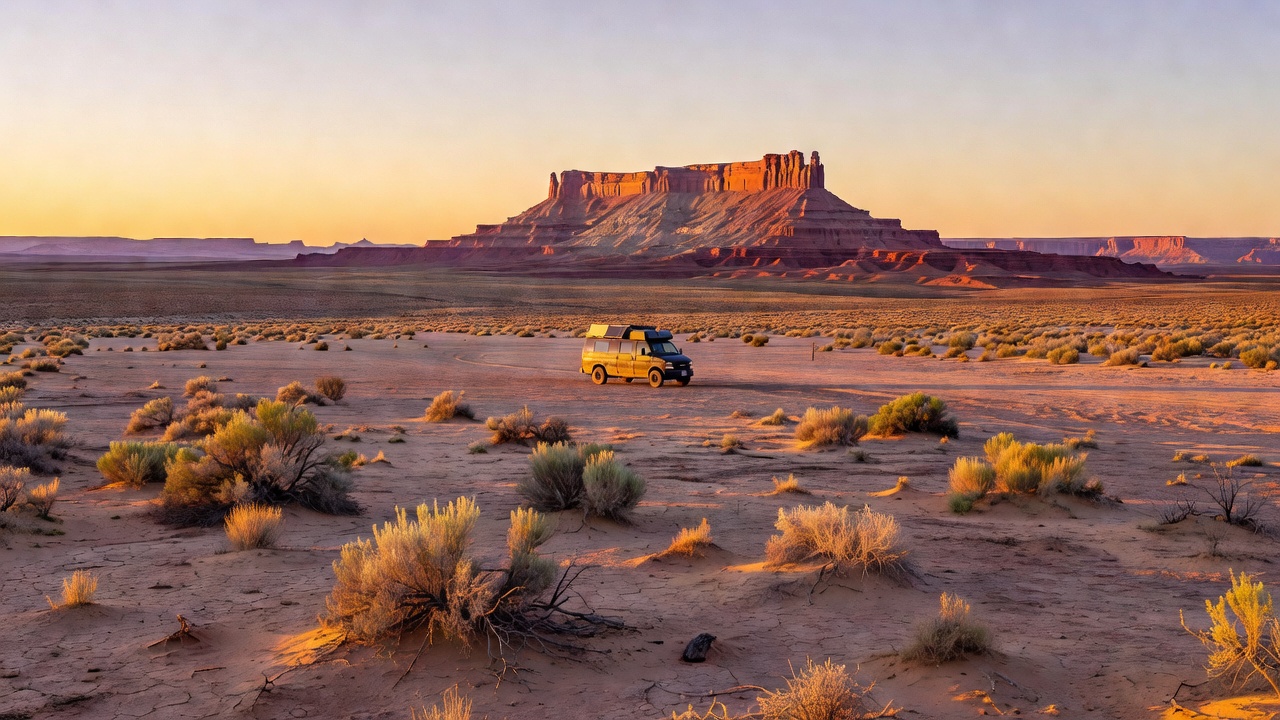
Boondocking
Strip off the romance and boondocking is just dry camping on public land nobody bothered to develop — no hookups, no restroom, no picnic table with your name on it. Almost always free; never free of effort.
In the field
It's the same patch of dirt the Forest Service and BLM call dispersed camping. 'Dispersed camping' is the boring-but-official term; 'boondocking,' 'dry camping,' and 'wild camping' are what RVers, van-lifers, and overlanders call it when they want it to sound like an adventure. Same dirt either way.
The word has a better backstory than most gear brands: it's from bundok, Tagalog for 'mountain,' which American soldiers brought home from the Philippine-American War (1899–1902) as slang for the middle of nowhere — 'the boondocks.' Which is the point — no reservation, no numbered slot, no fee, and a lot more room and quiet than a campground will ever give you.
Here's the catch, and it's the whole deal: nobody's coming. You haul in every gallon of water, run off your own batteries or solar, and pack out every scrap of trash. Boondocking is only 'free' if you already own the setup that makes you self-sufficient. e.g. a weekend a couple hours down a forest road — you roll in with full tanks and a charged battery, camp on a spot someone's obviously used before, and leave with your gray water and garbage still aboard.
Same public-land rules as dispersed camping: stay at least 150 feet from any stream or water source, keep clear of developed areas and trailheads, and expect a 14-day cap on both Forest Service and BLM ground before you move on. A campfire permit can be required even where fires are legal (year-round and free in the Pacific Southwest Region, for one), so check fire restrictions before you strike a match. And Leave No Trace isn't optional out here — pack it in, pack it out, reuse an existing spot, leave it cleaner than you found it. We flag the local rules on the sites we map, but the posted sign and the ranger district always get the last word.