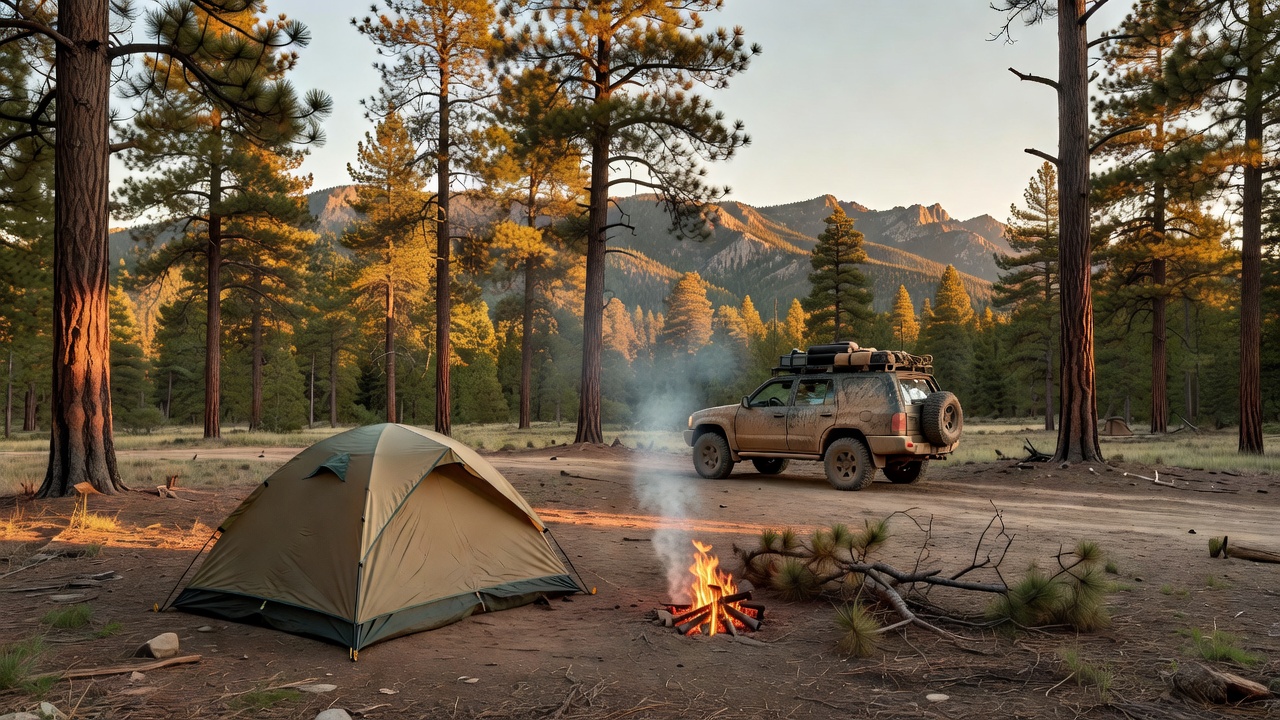
Dispersed camping
Dispersed camping is the government's own name for camping out on public land where nobody built anything for you — no campground, no hookups, no fee, no reservation. Free, wide open, and governed by a few rules that actually matter.
In the field
It's the Forest Service's word for camping anywhere in a national forest outside a designated campground, and it works about the same on BLM land, where most acreage is open unless it's posted closed. You pull off, set up where there's no hookup, no piped water, no toilet, no trash pickup — and because nothing's provided, it's almost always free and needs no reservation. For a lot of people that IS the appeal: solitude, room to spread out, dark skies, and no numbered slot booked six months ahead. It's the backbone of overlanding and boondocking.
The catch is the usual one: you're on your own. Haul your own water, manage your own waste, and don't count on a camp host or a ranger down the road.
The rules are real and worth knowing. Camp at least 150 feet from any stream or water source, keep clear of developed areas and trailheads, and reuse a spot that's already been camped on instead of clearing a fresh one. Stay limits are the rule, not the exception: national forests usually cap you at about 14 days, and BLM land is generally limited to 14 days within a 28-day period before you're expected to move on. Some forests and field offices set tighter limits or close specific areas, so check posted signs and the local office before you go.
Leave No Trace isn't a suggestion out here. Pack out everything — trash and toilet paper included — bury human waste in a hole about six inches deep at least 100 feet from water, and if fires are allowed, keep them small, carry a campfire permit if one's required, and drown, stir, and feel the ashes cold before you leave. e.g. you find a pull-off with an existing rock fire ring a quarter-mile down a forest road — you use that ring, not a new one, and you leave the site cleaner than you found it. We flag local rules on the sites we map, but the posted sign and the managing agency always get the last word.