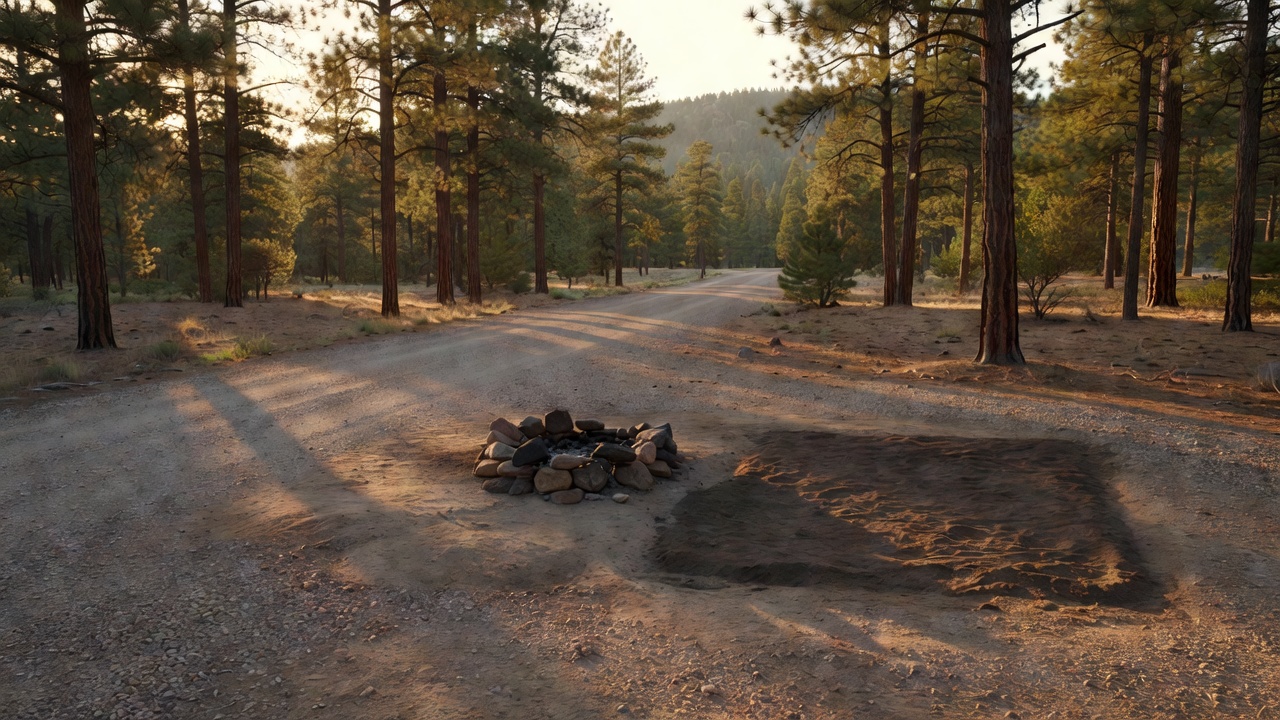
Designated Dispersed Site
A designated dispersed site is dispersed camping with a marker on it -- instead of picking any flat spot you like, you camp only at specific spots the agency has established and marked (a numbered post, a metal or rock fire ring, or a brown camping marker) along a forest road, because that stretch of country got popular enough that the land manager now steers everyone onto set spots to protect it.
In the field
A designated dispersed site sits right in the middle between open dispersed camping and a developed campground. The Grand Mesa, Uncompahgre and Gunnison National Forests put it plainly: "Designated campsites are vehicle-accessible campsites that are outside of developed campground facilities," and "Each designated site is marked with a metal fire ring and a site-numbered post with a universal camping symbol." You still drive up, you're still usually out on your own for water and waste -- the Medicine Bow-Routt's Vedauwoo sites are listed as "Free" with "no services, such as, toilets, electric, water or trash" -- but somebody has already chosen the spot and put a marker on it. The mark isn't always a numbered post; it may just be a rock fire ring, or, on the White River, a plain "brown camping marker."
Here's the catch, and it's the whole point of the word: you don't get to sprawl. In a designated-dispersed area, "Camping is only allowed in designated sites," and forests draw a tight leash around the marker -- at Vedauwoo, "All vehicles and campfires must be within 50 feet of the site marker at all times, 100 feet for group sites," and "Fires are only permitted in established fire rings." So the freedom that defines regular dispersed camping -- pull off anywhere legal and pick your own patch -- is gone here; the post is the rule. Stay limits still apply and still vary: the GMUG caps it at "a maximum of 14 days," Vedauwoo at 16, both first-come, first-served.
Why bother marking dispersed camping at all? Because the popular spots were getting loved to death. The White River National Forest, converting a long open-camping corridor to designated sites, says the goal is "more consistent management, improve public safety, reduce resource damage, and provide the public with a better experience." It's a growing trend on high-traffic national forest land, and it isn't always free for long -- the White River plans a seasonal fee under a concessionaire starting in 2026 for a stretch that used to cost nothing. Think of it as the land manager's compromise between "camp wherever" and "report to the campground booth."
The practical rule: this is area-specific. Where a forest has posted a designated-dispersed system you must use a marked site -- camping between the markers can get you moved along or ticketed -- but drive one drainage over and ordinary open dispersed camping may still be the rule. So check the specific area's page, the Motor Vehicle Use Map, and any posted signs before you assume. American Adventurer flags which spots are designated versus open, so you know before you turn off the highway whether you're free to pick a patch or expected to pull into a numbered one.
See also
Put it to use
Sources
- Forest Service (Grand Mesa, Uncompahgre & Gunnison NFs, Crested Butte) -- Designated Camping: "Designated campsites are vehicle-accessible campsites that are outside of developed campground facilities"; "Each designated site is marked with a metal fire ring and a site-numbered post with a universal camping symbol"; "Camping is only allowed in designated sites"; max 14 days; fires only in established rings
- Forest Service (Medicine Bow-Routt NFs) -- Vedauwoo Designated Dispersed Campsites: 97 designated dispersed sites, each a rock fire ring; "All vehicles and campfires must be within 50 feet of the site marker at all times, 100 feet for group sites"; "Free"; "no services, such as, toilets, electric, water or trash"; stay limited to 16 days
- Forest Service (White River NF) -- Homestake Valley camping change: converting open dispersed to designated to provide "more consistent management, improve public safety, reduce resource damage, and provide the public with a better experience"; "Each site is designated with a brown camping marker"; seasonal fee planned starting 2026