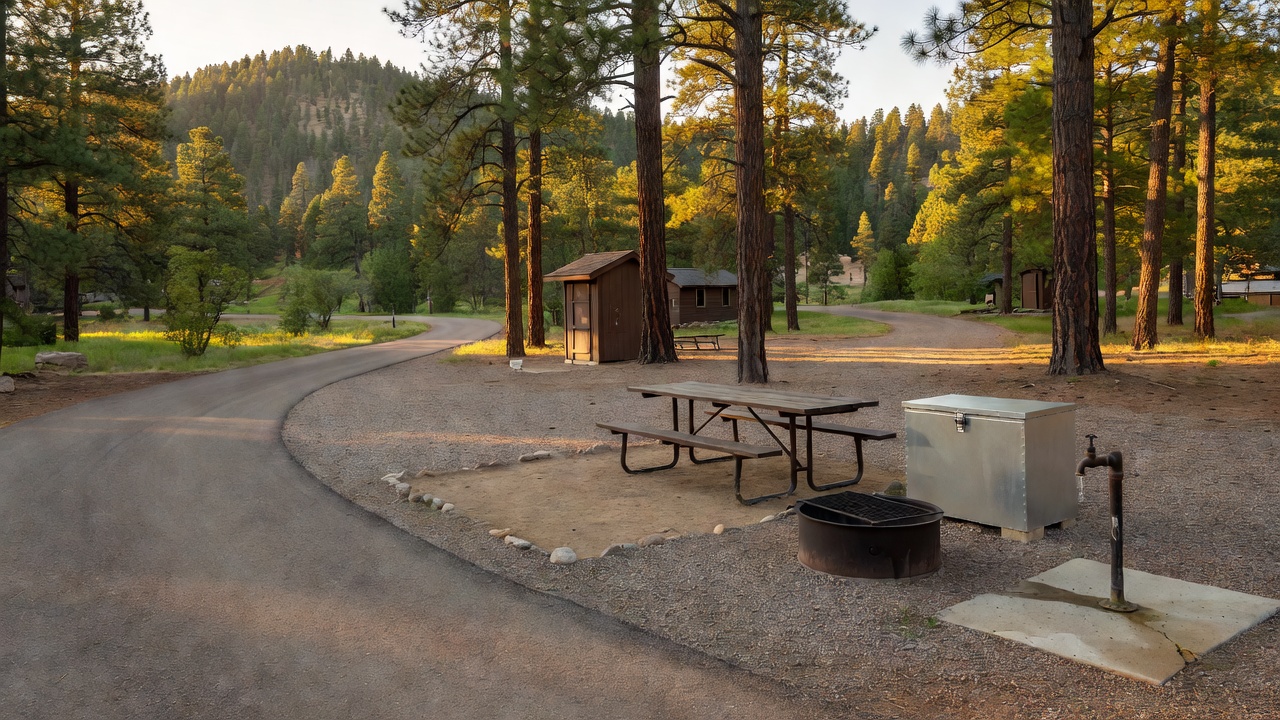
Developed Campground
A developed campground is the drive-right-up, numbered-and-maintained kind of camping -- a laid-out loop of established sites, each with at least a picnic table and fire ring, plus shared amenities like toilets, drinking water and sometimes hookups or showers -- almost always for a fee and often by reservation, sitting at the opposite end of the spectrum from free dispersed camping.
In the field
A developed campground is public-land camping with the infrastructure built in. The National Park Service describes the layout plainly: a campground "typically consists of camping loops (roads shaped in an actual loop), and each loop has numerous camping sites established," each with its own site number. This is the "frontcountry" end of camping -- "where visitors drive to an established campground" -- and it's what most people actually do; the NPS says flat out that "most camping that occurs in parks is considered frontcountry camping." A single unit within it is a developed campsite: your numbered spot with a pull-in for the vehicle, a picnic table, and a fire ring, sharing the loop's toilets and water.
The draw is the amenities, and they scale. At the fuller end, the NPS says its developed campgrounds offer "a variety of amenities such as showers, flush toilets, and camp stores," along with water pumps and electric sites -- "the most amenities of any park camping option" and "the easiest to reach, with maintained roads leading to each location." At the plainer end, a developed forest campground might be just a graded loop with vault toilets and a hand-pump spigot. Either way the defining trait is the same: someone laid it out, numbered it, and maintains it, so you get a level pad and a real toilet instead of picking a patch of dirt.
Here's the catch: convenience costs money and neighbors. A developed campground almost always charges a per-night fee -- the NPS Ozark sites, for example, commonly run around $20 a night for a non-electric spot and $30 with electric -- and the popular ones book out, with "All developed campsites require a reservation" and advice to "plan months in advance" through Recreation.gov. And you won't be alone: the Park Service is refreshingly honest that a frontcountry campground is "a lot like living in a neighborhood," with "neighbors surrounding you, kids playing and riding bikes, some noise." That's the trade for the flush toilet and the water spigot.
The line worth knowing is developed versus dispersed. A developed campground means designated sites, amenities, a fee, and usually a reservation; dispersed camping means no facilities, no fee, and no reservation -- you just pull off a forest road and are on your own for water and waste. Neither is better; they're different tools. American Adventurer maps both, so you can tell before you leave the pavement whether you're rolling into a numbered loop with a faucet or heading out to a spot where the only amenity is the view.
See also
Put it to use
Sources
- National Park Service -- Frontcountry Camping: "drive to an established campground"; camping loops with numbered sites; "like living in a neighborhood... neighbors... some noise"; reserve months ahead via Recreation.gov
- National Park Service (Ozark National Scenic Riverways) -- Developed Campgrounds: amenities "such as showers, flush toilets, and camp stores," water pumps, electric sites; "most amenities of any park camping option"; "easiest to reach, with maintained roads"; "All developed campsites require a reservation"; example fees $20 non-electric / $30 electric per night