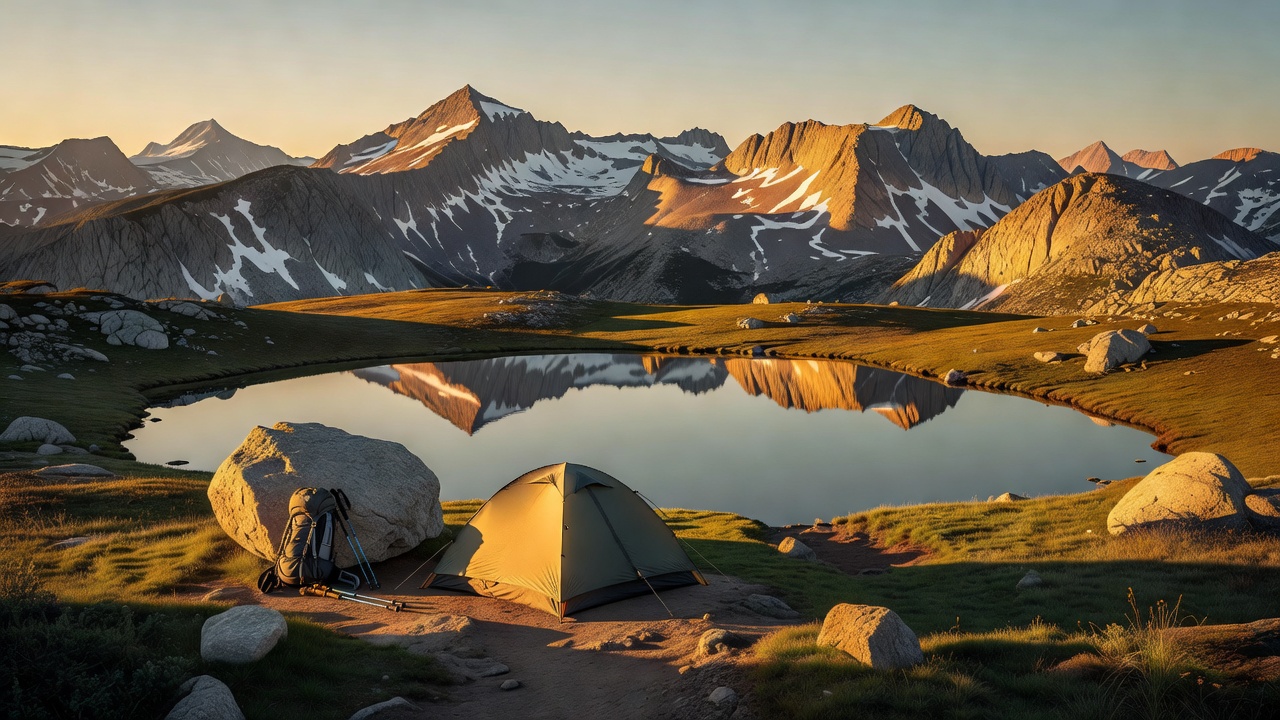
Backcountry camping
Backcountry camping means camping out in the wild -- miles from the nearest road or campground, reached under your own power on foot or by boat -- carrying in everything you need and packing out everything you leave.
In the field
What sets backcountry camping apart from boondocking or roadside dispersed camping isn't the lack of hookups -- it's how you get there. You leave the vehicle at a trailhead and walk, paddle, or climb to a remote spot, so everything you sleep in, cook with, and drink has to fit on your back or in your boat. The National Park Service describes it as venturing into wilderness for backpacking, water trips, and climbing, with "opportunities for solitude." There's no camp host, no spigot, no picnic table -- the amenities, as the NPS puts it, are the fresh air, forests, mountains, clear rivers and lakes, and exceptional night skies.
Because these places are fragile and popular, they're often the most regulated way to camp. The NPS tells you to check "ahead of time about any necessary permits and park regulations," and in high-demand wilderness a quota or lottery permit is common. On national forests the backcountry is usually free to camp in, but the Forest Service warns that heavily-used areas "such as popular trailheads or even remote wilderness areas" may require a permit and fee. Where you pitch is regulated too: the FS asks you to camp "at least 200 feet from any stream or other water source," and stay limits apply -- Mt. Hood, for example, allows "only up to 14 consecutive days" in one spot and 28 days a year total.
Self-reliance is the whole deal, because help is a long way off. Carry your own water or a way to treat it, store your food against animals (a bear canister is required on many units), and deal with your own waste -- the Forest Service says bury solid human waste "in catholes dug 6 to 8 inches deep at least 200 feet from water, camp, and trails." Pack out every scrap of trash and follow Leave No Trace; the NPS asks you to leave the place "cleaner than you found it."
The payoff is country you simply can't drive to -- real solitude and quiet a full-hookup loop will never give you. But it's also the least forgiving way to camp: no cell bars, no host, and self-rescue if something goes wrong, so plan your route, test your gear, and leave your itinerary with someone. American Adventurer maps the trailheads and the forest roads that reach them, but for what's allowed beyond the trailhead, the managing agency's wilderness or backcountry office always has the final word.
See also
Put it to use
Sources
- National Park Service -- Backcountry Camping: venturing into wilderness; solitude & self-reliance; check permits & regulations; Leave No Trace
- US Forest Service -- Intermountain Region, Dispersed Camping: camp 200 ft from water; catholes 6-8 in; stay limits; remote/wilderness areas may need a permit; pack-in pack-out
- US Forest Service -- Mt. Hood NF, Dispersed Camping: no toilets/water/fire rings/trash; 14 consecutive days, 28 days/year; pack out everything