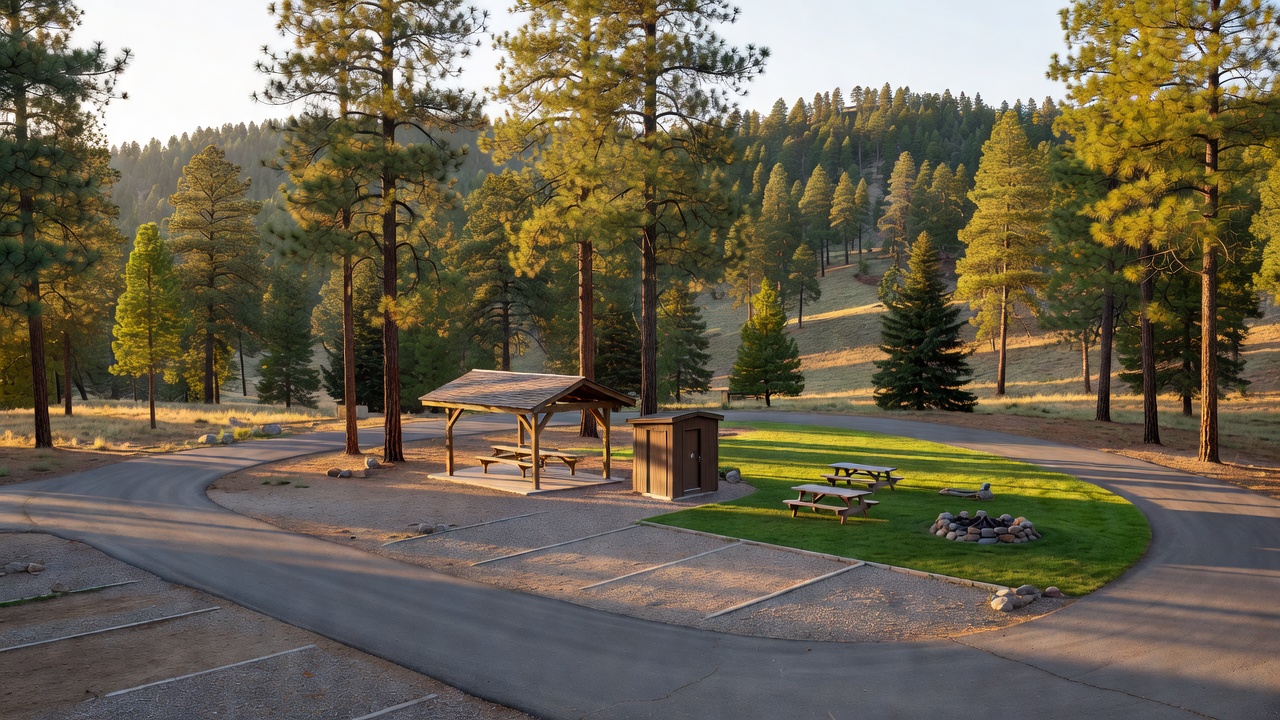
Frontcountry
The frontcountry is the developed, drive-right-up part of a park or forest -- the campgrounds, trailheads, picnic areas and visitor centers you reach on a paved or maintained road without hiking in -- and it's where most people actually camp, sitting at the opposite end of the spectrum from the backcountry.
In the field
Think of the frontcountry as the front porch of public land. Land managers picture recreation on a spectrum that runs from developed-and-roaded at one end to primitive-and-remote at the other, and the frontcountry is the developed, roaded end -- the part you can reach with a normal car. The Forest Service describes these as settings that are easily travelled and convenient for connecting communities to the forest. When it comes to camping, the National Park Service says flat out that "most camping that occurs in parks is considered frontcountry camping," the kind "where visitors drive to an established campground" -- which, it notes, is "commonly referred to as car camping." Even the trails work this way: front-country paths are the maintained, well-signed ones near the road, and the NPS is honest that they're only "maintained for the first few miles" before "they become routes into the backcountry, where route finding and navigational skills are highly recommended."
Here's the catch: convenience is the whole point, and so is the price you pay for it -- other people. The Park Service doesn't sugarcoat what a frontcountry campground feels like, calling it "a lot like living in a neighborhood," where "you'll likely have neighbors surrounding you, kids playing and riding bikes, some noise, the smell of BBQ cooking." That's not a knock -- flush toilets, a water spigot, a camp host, and a paved pull-in are genuinely nice. But if solitude is what you're after, the same agency points you the other direction, toward off-the-beaten-path campgrounds or the backcountry.
The word earns its keep because the rules and the expectations flip at that line. Frontcountry usually means reservations, day-use or amenity fees, posted quiet hours, and staff somewhere nearby; the backcountry usually means permits, self-reliance, and no guarantee of water. So the paved trailhead lot with a vault toilet and a map board is frontcountry -- the unmarked junction two ridges past it is not, and you'd better have packed your own water. American Adventurer maps both the developed sites and the forest roads that string them together, but knowing which zone you're standing in is what tells you whether to expect a faucet or to bring your own.
See also
Put it to use
Sources
- National Park Service -- Frontcountry Camping: drive to an established campground, "commonly referred to as car camping"; camping loops; "like living in a neighborhood"
- National Park Service -- Front-Country Hiking Trails: maintained near roads for the first few miles before becoming backcountry routes; no reservations for front-country day hiking
- US Forest Service -- recreation settings (frontcountry = developed, roaded settings convenient for connecting communities to the forest; campgrounds, RV hook-ups, picnic sites, roads)