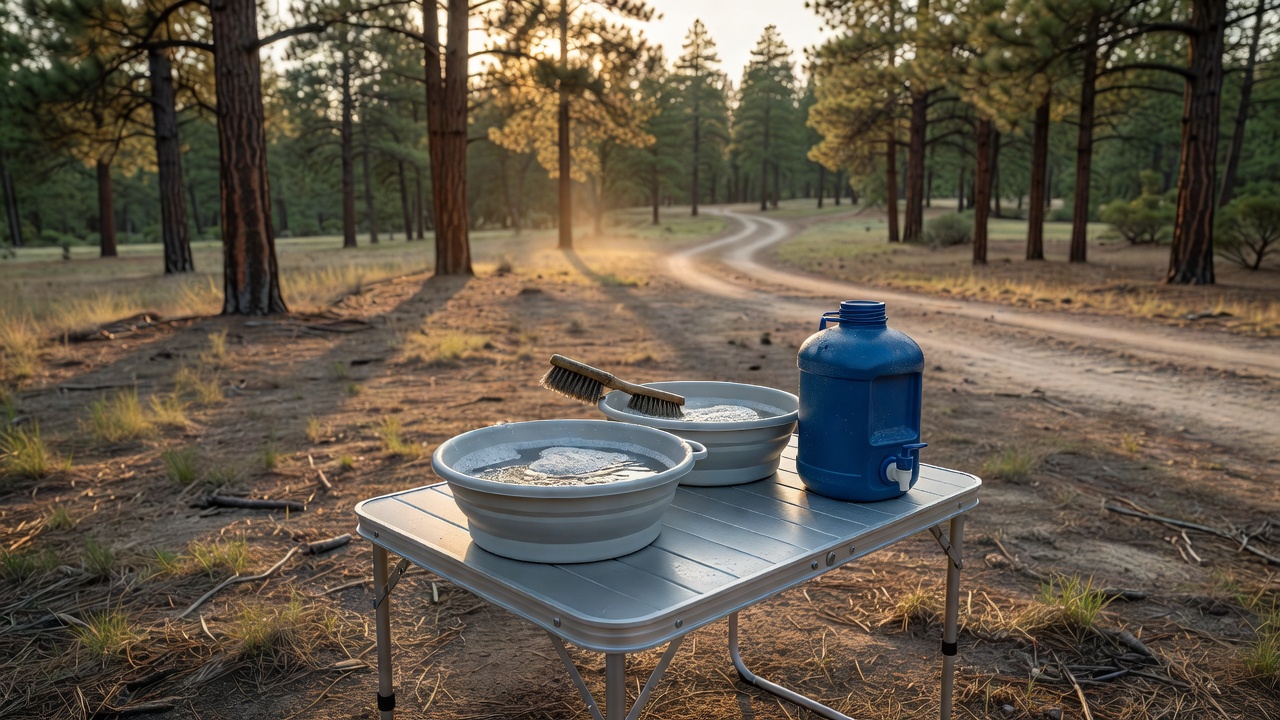
Gray water and black water
Gray water is what drains out of your sinks and shower; black water is what leaves the toilet. The split tells you how nasty each one is and how carefully to carry it -- but on national forest land it buys gray water no pass at all. The Forest Service puts it in one sentence: "Discharging and draining gray water and black water (sewage) onto national forest lands is illegal and punishable by fines."
In the field
For your trip the difference is mostly about handling, not about permission. Black water is the tank nobody argues about -- it goes to a dump station, full stop. Gray water is the one people talk themselves into, because it looks like dishwater, and dishwater feels harmless. It isn't quite: the Caribou-Targhee National Forest calls it out by name -- "It is a misconception that emptying graywater tanks from camping trailers and motor homes is acceptable. It is polluting and a violation, due to the contaminates from food, soaps, detergents, ect., and can also be a wildlife attractant. All wastewater tanks need to be emptied at a designated dump station." And note that you make gray water even with no tank at all. A tent, a pot of noodles and a bottle of soap produces it, and as Fishlake National Forest puts it, "dispersed camping generally means no bathrooms and no handwashing stations."
The rule underneath all of this is 36 CFR 261.11, the Forest Service sanitation regulation, and it never uses the word gray. It prohibits "placing in or near a stream, lake, or other water any substance which does or may pollute," and prohibits failing to dispose of all garbage "including any paper, can, bottle, sewage, waste water or material" either by removing it from the area or putting it into a receptacle or place provided for that purpose. Waste water is waste water. Monongahela National Forest cites exactly those two paragraphs -- 261.11(c) and (d) -- when it says draining either kind onto the forest is illegal and fineable. Park units say the same thing in plainer words: Theodore Roosevelt National Park requires that RVs "dispose of waste water by using either a holding tank or a catch bucket" and that "dumping of any waste on the ground is prohibited," and Capitol Reef requires that "water from dishwashing, bathing, and solar showers must be collected and deposited in gray-water disposal sinks." None of the federal pages read for this entry hand you a distance at which it becomes fine to fling the wash basin. If a forest you're in publishes one, it's theirs -- go read it.
Here's the catch that surprises people: gray water isn't even one thing legally, and the line moves at the state border. Washington's health department counts "bathtubs, showers, bathroom sinks, washing machines, dishwashers, and kitchen sinks" as greywater -- everything but toilets and urinals. Florida goes the other way and defines black water as "wastewater from toilets, urinals and kitchen drains," so your greasy dish water is legally sewage there. Those are home-plumbing reuse rules, not camping rules, and neither one tells you what's allowed at your campsite -- but they're a fair warning that "it's only gray water" is an argument, not a defense. The question that actually decides your case is simpler: did it end up on the ground?
The distances around all this vary by forest, so check the unit you're actually in rather than the one you read about last year. For catholes and campsite placement, the Intermountain Region and Olympic National Forest both say 200 feet from water; the Pacific Southwest Region, Fishlake and Caribou-Targhee say 100 feet; Dixie National Forest says 300 feet. Toilet paper gets packed out, WAG bags cover ground too rocky to dig, and composting toilets are encouraged. Then plan the dump the way you plan fuel, because the station is often not where you're camping -- Summit Lake Campground on the Monongahela has no dump facilities of its own and sends you to an outfitter in Richwood, to Marlinton, or to a donation-based station at Cranberry Campground. And whatever you do at the end of the trip, keep the wipes and the chemicals out of the black tank: 261.11(a) also prohibits putting anything in a toilet or vault "which could damage or interfere with the operation or maintenance of the fixture."
See also
Put it to use
Sources
- GovInfo -- 36 CFR 261.11, Sanitation (prohibits polluting water; failing to dispose of "sewage, waste water"; damaging a toilet or vault)
- USDA Forest Service -- Summit Lake Campground, Monongahela NF ("Discharging and draining gray water and black water (sewage) onto national forest lands is illegal and punishable by fines under 36 CFR 261.11(c) and 36 CFR 261.11 (d)")
- USDA Forest Service -- Dispersed Camping, Caribou-Targhee NF (the graywater-tank "misconception"; catholes 100 ft; WAG bags; composting toilets encouraged)
- USDA Forest Service -- Dispersed Camping, Intermountain Region (grey water to dumping stations; catholes and campsites 200 ft from water; pack out toilet paper)
- USDA Forest Service -- Camping & Cabins, Dixie NF (grey water to dumping stations; catholes 300 ft from water)
- USDA Forest Service -- Dispersed Camping, Olympic NF (catholes 200 ft; do not camp within 200 ft of water)
- USDA Forest Service -- Dispersed Camping, Pacific Southwest Region (catholes 100 ft from water)
- USDA Forest Service -- Dispersed Camping, Fishlake NF ("no bathrooms and no handwashing stations"; catholes 100 ft)
- National Park Service -- Capitol Reef NP Campground Regulations (dishwashing, bathing and solar-shower water must go in gray-water disposal sinks)
- National Park Service -- Theodore Roosevelt NP Camping Regulations (holding tank or catch bucket; no dumping of any waste on the ground)
- Washington State Department of Health -- Greywater Reuse (greywater = everything but toilets and urinals, including kitchen sinks and dishwashers)
- US EPA -- Summary of Florida's Water Reuse Guideline or Regulation for Onsite Non-potable Water Reuse (black water = "wastewater from toilets, urinals and kitchen drains")