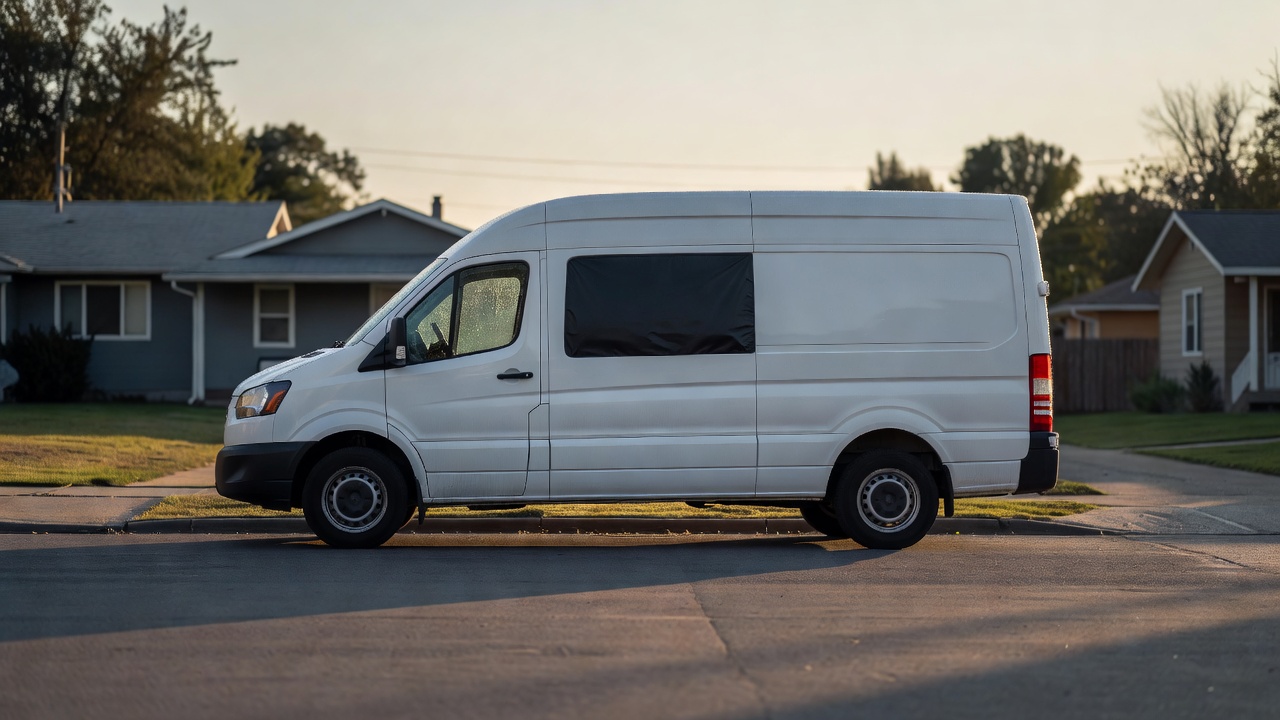
Stealth Camping
Stealth camping is sleeping in your vehicle somewhere that isn't a campsite -- a city street, a parking lot, a highway pullout -- while looking as much as possible like nobody's inside: no awning, no chairs, windows covered, arrive late, leave early. It's a technique for places where camping isn't allowed, which is exactly why the word "stealth" is in there doing the heavy lifting.
In the field
Start with what stealth camping is not, because that's where the confusion lives. On most national forest and BLM land you don't need to hide, because you're allowed to be there. The Forest Service defines dispersed camping as "camping anywhere in the National Forest OUTSIDE of a designated campground," and the BLM says dispersed camping on its land is "generally limited to 14 days within any 28-day period." That's not stealth, that's just camping. Stealth camping is the thing you do when you are somewhere that camping is not on the menu at all -- a residential street, a business lot, a trailhead you're not supposed to sleep at -- and your plan for the rules is to not be noticed by them. The whole craft is negative space: no awning cranked out, no chairs, no stove, no string lights, nothing that turns a parked vehicle into a visible camp.
Here's the catch, and it's the entire catch: "stealth" is not a legal category. Nothing about being quiet and tidy changes what the local law says, and a lot of the classic stealth spots are explicitly spoken for. Take the plan everybody thinks is the safe one -- I'll just sleep at a rest area. In Washington, the statute says flatly that it is unlawful to "stop, stand, or park any vehicle ... for more than eight hours within a twenty-four hour period," and separately unlawful "to camp or to maintain a camp, tent, or other sleeping accommodation or facility, in any safety rest area," with the State Patrol directed to enforce it. That's one state's answer; every state writes its own, and they range from a two-hour limit to no limit at all. The lesson isn't "rest areas are illegal," it's that the rest area you're banking on has a specific rule and you don't know it yet.
In town it's murkier and the wind is not at your back. Many municipalities have laws prohibiting overnight parking or sleeping in vehicles outright -- in Los Angeles, living in a vehicle is prohibited on most streets -- and in June 2024 the Supreme Court held 6-3 in City of Grants Pass v. Johnson that enforcing generally applicable laws against camping on public property is not "cruel and unusual punishment," displacing the Ninth Circuit rule from Martin v. Boise that had limited enforcement. Read that as a practical forecast rather than a legal opinion: cities have more room to enforce camping bans than they did, not less. The private-lot version has the same soft floor. Vandwellers have long parked at Walmart and Cracker Barrel, but those are somebody's parking lots -- permission is the manager's to give and the manager's to take back, and a yes at one store is not a policy at the chain.
It's also worth saying plainly who's actually out there, because the internet version of this is a lifestyle and the real version often isn't. People living in vehicles without a permanent address are, as a matter of definition, counted as homeless, and a number of California cities have "safe parking" programs -- designated lots with some facilities and some security -- precisely because the alternative is people hiding on side streets. If that's the situation, the answer isn't better window covers; it's finding the lot that's actually meant for you.
So the honest advice is short. If you're anywhere near public land, don't stealth camp -- pull up the motor vehicle use map and go camp legally a few miles out, where the rule is 14 days and nobody's knocking. If you're stuck in town, call ahead, park where you've been told you can park, and understand you're relying on permission rather than on right. And whatever you do, leave nothing: stealth camping got its reputation from the small number of people who left evidence, and every posted "no overnight parking" sign in the country is a monument to one of them. A footnote that says it better than we can -- Wikipedia has no article for stealth camping. Search it and you get redirected to Leave No Trace.
See also
Put it to use
Sources
- Forest Service (Pacific Southwest Region) -- Dispersed Camping: dispersed camping is "camping anywhere in the National Forest OUTSIDE of a designated campground"; "NOT allowed in the vicinity of developed recreation areas" such as campgrounds, picnic areas or trailheads; "no services; such as piped water, toilets or trash removal"; stay "usually 14 days, but this can be further limited in some National Forest areas"
- Bureau of Land Management -- Camping: "Dispersed camping is generally limited to 14 days within any 28-day period"; "Don't camp within 1 mile of campgrounds, trailheads, or picnic areas"; "Stay at least 200 feet from lakes, rivers, and streams"; Long-Term Visitor Areas in California and Arizona where winter visitors "may camp up to seven consecutive months with a permit"
- RCW 47.38.020 (Washington State Legislature) -- Limitations on use of rest areas: unlawful to "stop, stand, or park any vehicle, including but not limited to trailers, campers, and motorcycles, for more than eight hours within a twenty-four hour period"; unlawful "to camp or to maintain a camp, tent, or other sleeping accommodation or facility, in any safety rest area"; disabled vehicles left over forty-eight hours "subject to mandatory impoundment"; the Washington State Patrol "shall enforce this section"
- City of Grants Pass v. Johnson (Wikipedia) -- decided June 28, 2024, 6-3: "The enforcement of generally applicable laws regulating camping on public property does not constitute 'cruel and unusual punishment'" under the Eighth Amendment; displaced the Ninth Circuit standard from Martin v. Boise, which had held a city could not enforce an anti-camping ordinance when its homeless population exceeds available shelter beds
- Vandwelling (Wikipedia) -- "Many municipalities have laws prohibiting overnight parking and/or sleeping in vehicles"; "In Los Angeles, living in a vehicle is prohibited on most streets"; "Some vandwellers have parked in Walmart and Cracker Barrel parking lots"; vandwellers lacking a permanent address are "technically considered 'homeless'"; California cities sponsor "safe parking" initiatives offering "limited facilities and some security in designated Safe Parking lots"
- Stealth camping (Wikipedia) -- verified this fire: there is no article; the title redirects to Leave No Trace