Wild camping
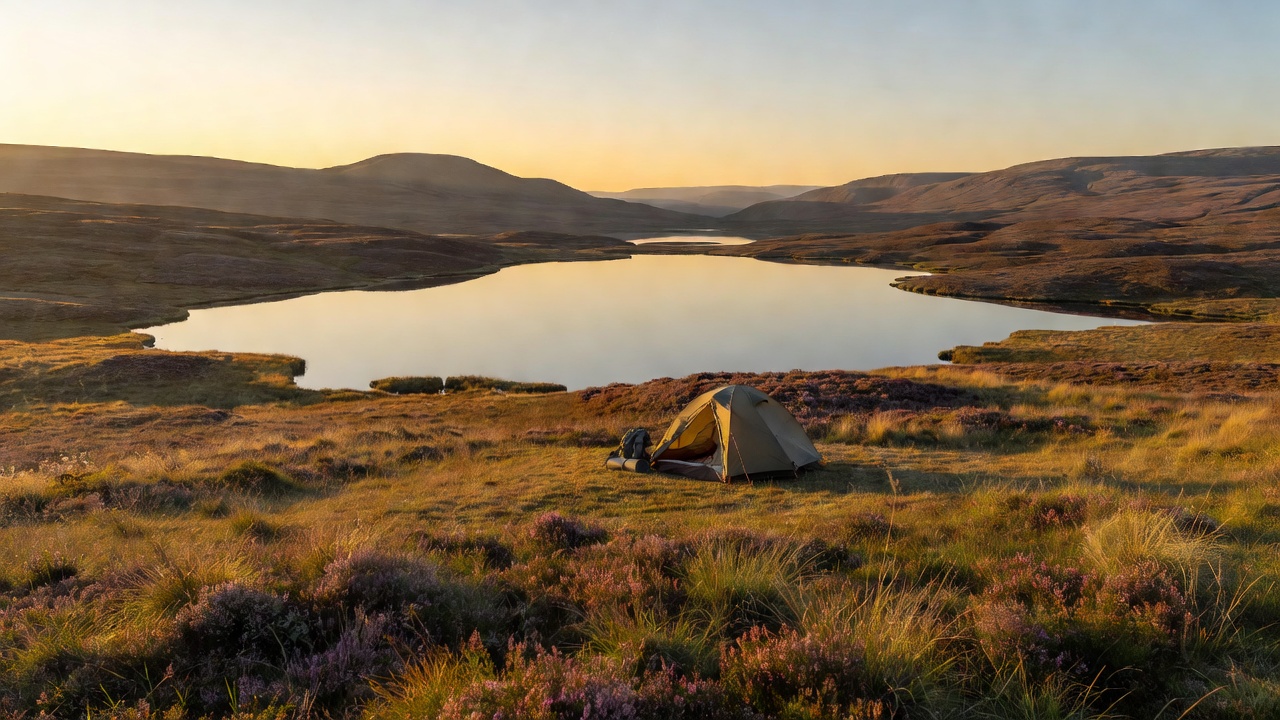
Wild camping is the British and European name for pitching a tent outside any designated campsite -- the exact same act Americans call dispersed camping. The word travels; the law behind it does not. In Scotland it's a real statutory right, in most of England it needs the landowner's permission, and in the US there is no right to roam at all, so your permission comes from whichever agency owns the ground under you.
In the field
The definition is refreshingly boring: wild camping is "the act of camping in areas other than designated camping sites," and "typically this means open countryside." That is word for word the same activity the Forest Service calls dispersed camping -- "camping anywhere in the National Forest OUTSIDE of a designated campground." Two names, one act. So if you have been watching British hillwalking videos and wondering what the American equivalent is, there isn't one to find: it's dispersed camping, and that's the phrase to use when you call a ranger district, because "wild camping" is not a term in American land-management vocabulary and will get you a polite pause on the phone.
What does not translate is the assumption riding underneath the word. In Britain and much of northern Europe, wild camping is bound up with the right to roam -- "the general public's right to access certain public or privately owned land, lakes, and rivers for recreation and exercise" -- which is codified in law in Austria, Belarus, the Czech Republic, Estonia, Finland, Iceland, Latvia, Lithuania, Norway, Scotland, Sweden and Switzerland. Scotland's version is the one people mean. The Land Reform (Scotland) Act 2003, which received Royal Assent on 25 February 2003, codified the old tradition of universal access, and its access rights "apply to any non-motorised activities, including walking, cycling, horse-riding and wild camping." That's an actual right, on most land, whether it's state or privately owned.
It is not a free-for-all, though, and Scotland's official code is unusually specific about the shape of it: the right covers "lightweight camping in a tent, in small numbers and for no more than two or three nights in one place." Use small tents, "camp well away from buildings and roads," avoid "enclosed fields of crops or farm animals," and "take away all belongings and litter and leave no trace of your visit." Rights only exist if exercised responsibly, and byelaws can override the whole thing locally -- in Loch Lomond & The Trossachs National Park, seasonal byelaws mean camping in certain areas "is only permitted within campsites or with a camping permit." And here is the line Americans skate past: "access rights don't include motor vehicles." Scottish wild camping means you walked there with a tent on your back. It has never meant parking a van somewhere scenic.
England and Wales are a different story with one famous exception. The Countryside and Rights of Way Act 2000 gave the public "the conditional right to walk in certain areas of the English and Welsh countryside" -- to walk, note -- and "there is still no assumed right to camp in open countryside without the landowner's permission." The exception is Dartmoor, where two landowners spent years arguing that the Dartmoor Commons Act 1985 didn't cover camping. On 21 May 2025 the UK Supreme Court dismissed their appeal, and the National Park Authority's own summary is as plain as it gets: the judgment "ruled that backpack camping was allowed on Dartmoor under the Dartmoor Commons Act 1985." The statutory phrase at the heart of it is worth reading closely -- the public has a right of access "on foot and on horseback for the purpose of open-air recreation." On foot and on horseback. The same authority notes you "have never been able to stay overnight in motorhomes, camper vans or caravans in car parks and laybys." Even where wild camping wins in court, it wins for people carrying their bed.
The Nordic version is the one that sounds like a fantasy to an American, and the details are more mundane than the legend. In Finland you may camp "temporarily in the countryside, a reasonable distance from homes," even on private property, so long as it leaves no trace and doesn't impede the landowner's privacy or other rights. In Sweden the right of public access is written into the constitution and "it is allowed to put up a tent on any uncultivated land for a night or two." In Norway you may camp "at least 150 metres away from the nearest inhabited house or cottage," and "tourists are allowed to stay in one spot for up to two days." Notice the pattern: everywhere the right is real, it is also small, brief and quiet. Nobody's constitution protects a week-long basecamp.
Now the American translation, and it cuts both ways. On private land the answer is flat: "because American property rights include the right to exclude others, the freedom to roam does not generally exist in the United States." There is no European-style right to cross or sleep on someone's land here, and calling it wild camping doesn't change what it is. But on public land the US quietly beats most of Europe, because there is a great deal of it and dispersed camping is broadly allowed on national forest and BLM ground. The trade is that your permission comes from an agency and its local rules rather than from a general right, so the rules are specific: no services, "such as piped water, toilets or trash removal"; not "in the vicinity of developed recreation areas such as campgrounds, picnic areas, or trailheads"; a stay "usually 14 days, but this can be further limited in some National Forest areas"; camp "at least 150 feet from any stream or other water source"; and in some regions campfire permits are required year-round, even for a gas stove.
Practically, the habits transfer even when the law doesn't. Small camp, short stay, well back from water and roads, no fire when it's dry, dig your cathole "six (6) inches deep at least 100 feet away from any water source," carry the paper out, leave the site looking like nobody stopped. That behaviour is what keeps a right a right in Scotland and what keeps dispersed camping open in the States -- the fastest way to lose a good spot in either country is a ring of blackened rocks and somebody's tent bag. Check the local district's current rules before you go, because the national default and the local rule are not always the same thing. (American Adventurer maps where the legal dispersed spots actually are; the agency still writes the rules.)
See also
Put it to use
Sources
- Wild camping (Wikipedia) -- "Wild camping or dispersed camping is the act of camping in areas other than designated camping sites. Typically this means open countryside."; "In Scotland, following the Land Reform (Scotland) Act 2003, people may camp on most unenclosed land, whether state or privately owned, provided they adhere to the Scottish Outdoor Access Code."; "Although land access for outdoor recreation was improved in England and Wales with the introduction of the Countryside and Rights of Way Act 2000, there is still no assumed right to camp in open countryside without the landowner's permission."; "Wild camping is legal in Finland, even on private property, as long as it leaves no trace and does not impede the privacy or other rights of the landowner."; "Dispersed camping is the term given to camping in the United States on public land other than in designated campsites. This type of camping is most common on national forest and Bureau of Land Management land."
- Freedom to roam (Wikipedia) -- "The freedom to roam or right to roam ... is the general public's right to access certain public or privately owned land, lakes, and rivers for recreation and exercise."; codified in "Austria, Belarus, the Czech Republic, Estonia, Finland, Iceland, Latvia, Lithuania, Norway, Scotland, Sweden, and Switzerland"; Finland: "One may stay or set up camp temporarily in the countryside, a reasonable distance from homes"; Norway: "People are allowed to camp at least 150 metres away from the nearest inhabited house or cottage" and "Tourists are allowed to stay in one spot for up to two days."; Sweden: "It is allowed to put up a tent on any uncultivated land for a night or two."; the CROW Act 2000 gave "the conditional right to walk in certain areas of the English and Welsh countryside"; "Because American property rights include the right to exclude others, the freedom to roam does not generally exist in the United States."
- Scottish Outdoor Access Code (NatureScot) -- Camping: "In Scotland, you can enjoy the outdoors on most land if you act responsibly. This includes lightweight camping in a tent, in small numbers and for no more than two or three nights in one place."; "Use small tents and camp well away from buildings and roads"; "Avoid camping in enclosed fields of crops or farm animals."; "Take away all belongings and litter and leave no trace of their visit."; "Remember that access rights don't include motor vehicles."; "Do not light an open fire, including in fire bowls or BBQs, during times of high fire risk"; "If you need to pee, make sure you do so at least 30 metres from lochs, rivers and burns"; "Seasonal byelaws are in effect in Loch Lomond & The Trossachs National Park, which means that camping in certain areas of the National Park is only permitted within campsites or with a camping permit."
- Land Reform (Scotland) Act 2003 (Wikipedia) -- Royal Assent 25 February 2003; the Act "comprehensively codified into Scots law the ancient tradition of the right to universal access to the land in Scotland" and "establishes a right to be on land for recreational, educational and certain other purposes and a right to cross land"; "Access rights apply to any non-motorised activities, including walking, cycling, horse-riding and wild camping"; rights "exist only if they are exercised in a responsible manner, to which the Scottish Outdoor Access Code provides guidance"; exclusions include land adjacent to a residential property, private communal gardens, and fields in which crops have been sown or are growing
- UK Supreme Court -- Darwall and another (Appellants) v Dartmoor National Park Authority (Respondent), judgment 21 May 2025: the issue was "whether section 10(1) of the Dartmoor Commons Act 1985 confers on the public a right to pitch tents or otherwise make camp overnight on Dartmoor Commons"; the appeal was dismissed; the statutory right is that "the public shall have a right of access to the commons on foot and on horseback for the purpose of open-air recreation"
- Dartmoor National Park Authority -- Byelaw Review FAQs: "A Supreme Court judgment issued on 21 May 2025 ruled that backpack camping was allowed on Dartmoor under the Dartmoor Commons Act 1985."; on motorhomes: "You have never been able to stay overnight in motorhomes, camper vans or caravans in car parks and laybys."
- Forest Service (Pacific Southwest Region) -- Dispersed Camping: "Dispersed camping is the term used for camping anywhere in the National Forest OUTSIDE of a designated campground"; "Dispersed camping means no services; such as piped water, toilets or trash removal"; "Dispersed camping is NOT allowed in the vicinity of developed recreation areas such as campgrounds, picnic areas, or trailheads"; "You may camp in a dispersed area for a limited period of time, usually 14 days, but this can be further limited in some National Forest areas"; "Please place your campsite at least 150 feet from any stream or other water source"; "Campfire Permits are required year-round for the use of campfires, charcoal barbeques, gas stoves and lanterns outside of developed recreation areas"; "To dispose of feces, dig a hole six (6) inches deep at least 100 feet away from any water source"